• National Flag of Pakistan

    The National Flag of Pakistan (Urdu: پاکستان کا قومی پرچم) was adopted in its present form during a meeting of the Constituent Assembly on August 11, 1947, just three days before the country's independence, when it became the official flag of the Dominion of Pakistan. It was afterwards retained by the current-day Islamic Republic of Pakistan. The flag is a green field with a white crescent moon and five-rayed star at its centre, and a vertical white stripe at the hoist side.....

  • National Anthem of Pakistan

    The Qaumī Tarāna (Urdu: قومی ترانہ) is the National Anthem of Pakistan. The words "Qaumi Tarana" in Urdu literally translate to "National Anthem". The Pakistani national anthem is unique in that its music preceded its lyrics. At independence, on August 14, 1947, Pakistan did not have a national anthem......

  • Pakistan Army

    .......... Under Construction................

  • The Nature Beauty

    .......... Under Construction................

  • Pakistani Culture

    .......... Under Construction.................

Who we are

We are a society of Student, Ex-Army Officers & other citizen of Pakistan,

What we do

We are promoting Patriotism and social Awareness

Thursday, March 31, 2011

Pakistan Loses A Match, Wins Rare Unity

Posted by Shafeeq ur Rehman On 3:58 AM No comments


Mosques, churches, Sikh gurdwaras and Hindu temples were united in special prayers for the national team. Party flags disappeared in favor of the national flag, and Pakistanis learned a valuable lesson: an over-politicized nation has better things to do than watch boring politicians shouting on equally boring talk shows.


ISLAMABAD, Pakistan—Many Pakistanis were struck by the scenes they saw on the streets of Islamabad and Rawalpindi today: smiling shopkeepers, courteous car drivers and jolly passersby. The scenes were almost similar in Pakistani cities like Quetta, Karachi and Muzaffarabad. Teenagers painted their cheeks in the colors of the Green and the Crescent, and shops and offices displayed homemade and professional banners in support of the national team. Muslim, Christian, Sikh and Hindu places of worship across Pakistan were on the same page today. A nation demoralized by political and economic mess and beset by the disaster of fighting someone else’s failed war was suddenly transformed in the days leading up to today’s match.
Pakistani cricket team lost the match in the 2011 World Cup semifinal against India on Indian home turf. The defeat was minor: 29 runs short of victory. It seemed like a win that turned into defeat toward the end.
But more important than anything else, a nation divided by petty politics was united in a way not seen in a long time. It appeared Pakistanis wanted an excuse to show unity.

Instead of the flags of the failed political parties which dominate the landscape, this was a day for the Pakistani flag, which was seen in abundance in all the major cities and towns.
For a change, political talk shows that have nothing to offer except screaming, unimaginative and divisive politicians, took a backseat. An over-politicized nation got a break from politics and focused on other pursuits that make life beautiful.
Pakistanis were hurting after the defeat in front of the Indian team, make no mistake about that.
This is no ordinary sporting event. See the Indian reactions that preceded the match. A parrot owned by a roadside Indian fortune teller was killed by Hindu extremists for predicting a Pakistani win. Also, Indian hackers attacked Pakistani websites that predicted an Indian defeat. The worst thing to happen in Pakistan in the run up to the match was comments similar to what a Facebook user wrote on the wall of a Pakistani group for cricket fans after end of the match: “I still love my team … and I still hate END-ia!”

But generally Pakistanis did not resort to exaggerated expressions of rivalry, as in the Indian cases of the murdered parrot and the hacking of Pakistani sports websites.
For Pakistanis, it’s tough losing a match against India. Forget all the niceties about this being ‘just a game’. There is a reason why sporting events between Pakistan and India are so charged. It’s a war without bullets. Pakistanis can’t forget that India is the country that invaded Pakistan without provocation in 1971 and cut it in two. India dragged the region into a nuclear arms race. And India is yet to stop indirect claims to Pakistani territory. Lastly, the Indians are using the foreign-occupied territory of Afghanistan to arm and send terrorists into Pakistan and kill Pakistanis.
So, for Pakistan, the 1992 World Cup champions, it’s difficult to be defeated in the 2011 semifinal in front of India when victory was so close.
But theirs is a team that did reach the semifinal against great odds. And, more importantly, Pakistanis displayed unity despite a failed and divisive political culture, and despite foreign intervention by governments that encourage dividing Pakistanis between ‘liberals vs. extremists’ and ‘secular vs. Islamists’ in order to perpetuate a failed war in Afghanistan.
This match has shown that if we stop fighting other people’s wars and stop letting politics dominate everything, then we can recreate Pakistan’s golden age of the mid twentieth century, when Pakistan made impressive strides in culture, sports and economy.

Source :http://www.ahmedquraishi.com/2011/03/30/pakistan-loses-a-match-wins-rare-unity/

Wednesday, January 26, 2011

Mitti ka qarz :: Faseel-e-Jaan Se Aagay

Posted by Shafeeq ur Rehman On 4:58 AM No comments

Monday, January 24, 2011

O level student scores record 23 As

Posted by Shafeeq ur Rehman On 8:42 AM No comments


Shahid, a student of a private school in Islamabad, sat for 24 subjects and scored 23 As.

ISLAMABAD: A student in Islamabad, Ibrahim Shahid, set a new world record by scoring 23 As in Cambridge O level exams.
Shahid, a student of a private school in Islamabad, sat for 24 subjects and scored 23 As.
Attributing his success to his parents, Shahid recalled an incident where his teacher in Australia had written him off, stating that he would “never excel”. He added that every child is special and everyone has their own capabilities.
Earlier, Ali Moeen Nawazish, also a Pakistani student, had set a world record by securing 23 As in A level Cambridge exams.

Sunday, January 23, 2011

Hum Sipahi hein | Pak Army Telefilm

Posted by Shafeeq ur Rehman On 8:32 PM No comments

Muslim inventions that shaped the modern world

Posted by Shafeeq ur Rehman On 4:27 AM No comments


Courtesy:CNN World


 Think of the origins of that staple of modern life, the cup of coffee, and Italy often springs to mind.
But in fact, Yemen is where the ubiquitous brew has its true origins.
Along with the first university, and even the toothbrush, it is among surprising Muslim inventions that have shaped the world we live in today.
The origins of these fundamental ideas and objects -- the basis of everything from the bicycle to musical scales -- are the focus of "1001 Inventions," a book celebrating "the forgotten" history of 1,000 years of Muslim heritage.
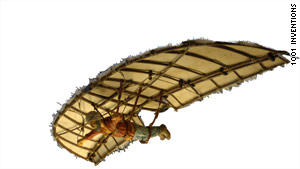
In 9th century Spain, Muslim inventor 

Abbas ibn Firnas designed a flying machine
hundreds of years before da Vinci drew plans of his own.

"There's a hole in our knowledge, we leap frog from the Renaissance to the Greeks," professor Salim al-Hassani, Chairman of the Foundation for Science, Technology and Civilisation, and editor of the book told CNN.
"1001 Inventions" is now an exhibition at London's Science Museum. Hassani hopes the exhibition will highlight the contributions of non-Western cultures -- like the Muslim empire that once covered Spain and Portugal, Southern Italy and stretched as far as parts of China -- to present day civilization.
Here Hassani shares his top 10 outstanding Muslim inventions:
1. Surgery
Around the year 1,000, the celebrated doctor Al Zahrawi published a 1,500 page illustrated encyclopedia of surgery that was used in Europe as a medical reference for the next 500 years. Among his many inventions, Zahrawi discovered the use of dissolving cat gut to stitch wounds -- beforehand a second surgery had to be performed to remove sutures. He also reportedly performed the first caesarean operation and created the first pair of forceps.
2. Coffee
Now the Western world's drink du jour, coffee was first brewed in Yemen around the 9th century. In its earliest days, coffee helped Sufis stay up during late nights of devotion. Later brought to Cairo by a group of students, the coffee buzz soon caught on around the empire. By the 13th century it reached Turkey, but not until the 16th century did the beans start boiling in Europe, brought to Italy by a Venetian trader.
3. Flying machine

"Abbas ibn Firnas was the first person to make a real attempt to construct a flying machine and fly," said Hassani. In the 9th century he designed a winged apparatus, roughly resembling a bird costume. In his most famous trial near Cordoba in Spain, Firnas flew upward for a few moments, before falling to the ground and partially breaking his back. His designs would undoubtedly have been an inspiration for famed Italian artist and inventor Leonardo da Vinci's hundreds of years later, said Hassani.

4. University
In 859 a young princess named Fatima al-Firhi founded the first degree-granting university in Fez, Morocco. Her sister Miriam founded an adjacent mosque and together the complex became the al-Qarawiyyin Mosque and University. Still operating almost 1,200 years later, Hassani says he hopes the center will remind people that learning is at the core of the Islamic tradition and that the story of the al-Firhi sisters will inspire young Muslim women around the world today.
5. Algebra
The word algebra comes from the title of a Persian mathematician's famous 9th century treatise "Kitab al-Jabr Wa l-Mugabala" which translates roughly as "The Book of Reasoning and Balancing." Built on the roots of Greek and Hindu systems, the new algebraic order was a unifying system for rational numbers, irrational numbers and geometrical magnitudes. The same mathematician, Al-Khwarizmi, was also the first to introduce the concept of raising a number to a power.
6. Optics
"Many of the most important advances in the study of optics come from the Muslim world," says Hassani. Around the year 1000 Ibn al-Haitham proved that humans see objects by light reflecting off of them and entering the eye, dismissing Euclid and Ptolemy's theories that light was emitted from the eye itself. This great Muslim physicist also discovered the camera obscura phenomenon, which explains how the eye sees images upright due to the connection between the optic nerve and the brain.
7. Music
Muslim musicians have had a profound impact on Europe, dating back to Charlemagne tried to compete with the music of Baghdad and Cordoba, according to Hassani. Among many instruments that arrived in Europe through the Middle East are the lute and the rahab, an ancestor of the violin. Modern musical scales are also said to derive from the Arabic alphabet.
8. Toothbrush
According to Hassani, the Prophet Mohammed popularized the use of the first toothbrush in around 600. Using a twig from the Meswak tree, he cleaned his teeth and freshened his breath. Substances similar to Meswak are used in modern toothpaste.
9. The crank
Many of the basics of modern automatics were first put to use in the Muslim world, including the revolutionary crank-connecting rod system. By converting rotary motion to linear motion, the crank enables the lifting of heavy objects with relative ease. This technology, discovered by Al-Jazari in the 12th century, exploded across the globe, leading to everything from the bicycle to the internal combustion engine.

10. Hospitals
"Hospitals as we know them today, with wards and teaching centers, come from 9th century Egypt," explained Hassani. The first such medical center was the Ahmad ibn Tulun Hospital, founded in 872 in Cairo. Tulun hospital provided free care for anyone who needed it -- a policy based on the Muslim tradition of caring for all who are sick. From Cairo, such hospitals spread around the Muslim world.
For more information on muslim inventions go to: muslimheritage.com. For more information about the exhibition at London's Science Museum go to: science museum.org.uk

http://articles.cnn.com/2010-01-29/world/muslim.inventions_1_hassani-inventions-muslim?_s=PM:WORLD

Saturday, January 22, 2011

Faseel-e-Jaan Se Aagay :: Capt Meraj

Posted by Shafeeq ur Rehman On 10:53 AM No comments

Build your own custom video playlist at embedr.com

‘Faseel-e-Jaan Se Aagay’, a drama series based on true stories of Brave Pakistanis launched today

Posted by Shafeeq ur Rehman On 8:54 AM No comments


The curtain raiser ceremony for “Faseel-e-Jaan Se Aagay,” a drama series jointly produced by ISPR and CRS was held at a local hotel in Karachi. Speaker ProvincialAssembly, Sind, Mr. Nisar Ahmad Khoro presided over the august function.
The launch event was attended by media, social elite and celebrities. During the event the audience was briefed about the project, the dimension of the issue it has covered and the heroes the glorious tribute is being paid to. The theme songof this drama series, ‘Imtehan Hai Imtehan’ and promos were also shown to audience on huge screens which received tremendous response.
The drama series is based on 11 true stories of courageous Pakistanis who gave tough resistance to terrorists with their resilience and sacrifices. The drama series will be televised by PTV Home on every Friday at 7:40 pm from January 14, 2011.
The drama series “Faseel-e-Jaan Se Aagay,” is aimed at depicting the courage of Pakistani people and armed forces that they exhibited during the operation against terrorists and militants in Mingora region. The drama series is an epic journey in the lives of common people, jawans and officers of Pakistan Army who despite all odds stood by their conviction and showed firm resolve to weed out terrorism and rendered invaluable sacrifices in the line of duty. The series will unveil the real face of terrorists and militants that have bee exploiting the downtrodden in the name of religion.
Rich on emotions, actions, sacrifice, valour and patriotism, the drama series contains certain scenes which have never appeared on TV screens in Pakistan. Through the poignant tales of gallant heroes of Pakistan Army who refused to yield in the face of terror and terrorists who held hostage the peace of the country, the drama series reinforces the true message of peace and forbearance; it also gives enough stimulus to pull people out of despondency and shows light on the other end of the tunnel and motivates them to stand by their security forces.
It may be recalled here that the debut production of CRS Public Relations, ‘Khuda Zameen Se Gaya Nahin’, won two awards in ‘Best Drama’ and ‘Best Writer’ categories at 9th Lux Style Awards held in Karachi. Earlier ‘Khuda Zameen Se Gaya Nahin’ was conferred upon the special PTV Award for best private drama serial with maximum viewer ship and revenue response during the year 2009. Winning of two awards at 9th LSA clearly endorsed that the popularity of the play cut across all sections of society. Encouraged by the previous successful experience, the CRS team alongwith ISPR forwarded the sacred mission of throwing light on the sacrifices made by members of Pak Army. The eleven dramas have been penned by renowned playwrights like Zafar Meraj, Wasi Shah,Sajjad Saji and Aamir Raza while talented list of directors includes Kashif Nisar, Azeem Sajjad, Shakeel Adnan and Aamir Yousaf.
Penned by young maestro Imran Raza and composed by Sahir Ali Bagga, the theme song of the play ‘Imtihan Hai Imtihan’ has been jointly sung by Rahat Fateh Ali and Shafqat Amanat Ali Khan.
Sahir Ali Bagga also sung a special DUA at the end of the ceremony after which most of the eyes were seen filled with tears as the audience was probably transported to another world due to pure emotions.